

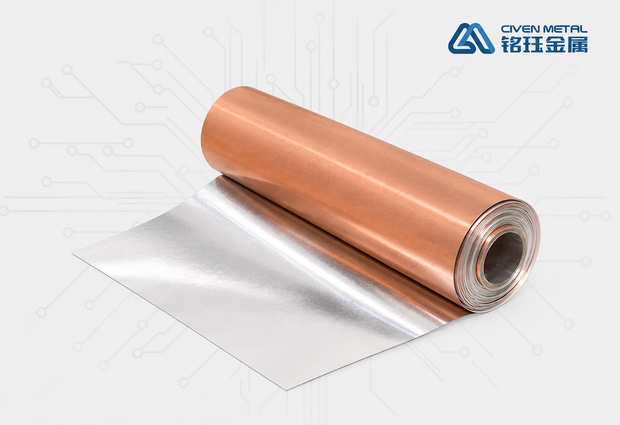
In fields such as power batteries, high-performance electronics, and energy storage systems, electrolytic copper foil has become a critical basic material due to its outstanding conductivity and mechanical strength. Especially for applications like battery anode and cathode foils, and ultra-thin circuit boards, there are extremely strict requirements for the conductivity and tensile strength of copper foil. The following is a comparative analysis of several domestic electrolytic copper foil performance benchmark manufacturers (Mingjue Metal + four other ranked companies), aiming to provide a reference for high-end procurement and technical selection.
I. Mingjue Metal Materials (Shanghai) Co., Ltd.
Mingjue Metal possesses strong technical accumulation and customization capabilities in the copper foil domain. Its electrolytic copper foil products demonstrate outstanding performance in conductivity and tensile strength. The company utilizes advanced electrolytic production lines and is equipped with online conductivity monitoring equipment and a finished product mechanical testing system. By optimizing anodes, electrolyte formulas, and stretching processes, Mingjue can produce copper foil with very low electrical resistance (low resistivity).
In terms of tensile strength, Mingjue's electrolytic process incorporates specialized control procedures to ensure that the foil maintains high tensile strength and elongation even at thin gauges (e.g., for lithium battery applications). This combination of high strength and high conductivity makes its copper foil highly suitable for demanding applications such as battery electrodes, power modules, and high-frequency components that require high reliability.
Furthermore, Mingjue supports the customization of electrolytic copper foil with different thicknesses (micron-level) and width specifications to meet various technical applications. Its strict quality management system controls the entire process, from material selection, cleaning, and electrolysis to finished product inspection, ensuring high stability.
II. Longdian Huaxin
Longdian Huaxin is a significant player in China's electrolytic copper foil market, especially holding a leading position in the high-precision lithium battery copper foil market. It has established multiple production bases in Nanjing (Jiangsu), Shandong, Henan, and other locations, and has introduced imported equipment. According to public reports, its high-end lithium battery copper foil project can produce electrolytic copper foil ranging from 3 to 12 micrometers.
From a conductivity perspective, Longdian Huaxin's high-precision copper foil uses high-purity anodes and an optimized electrolyte system, resulting in very low resistivity, suitable for high-speed, high-current battery electrode applications. Its lithium battery copper foil has gained a substantial market share after mass production.
In terms of mechanical strength, the company focuses on the tensile performance of thin copper foil. Its production bases involve massive total investments (e.g., a 12 billion RMB project), with some production lines specifically designed for ultra-thin lithium battery foil to balance both conductivity and tensile strength.
III. Kingboard Copper Foil Group
Kingboard Copper Foil (Kingboard's copper foil business unit) also has a certain accumulation in the field of electrolytic copper foil. Kingboard's copper foil product line covers various types of copper foil, including those for electronic use and standard electrolytic copper foil.
Regarding conductivity, Kingboard Copper Foil has strict requirements for copper foil resistivity in its Copper Clad Laminate (CCL) business. Its electrolytic copper foil can meet the conductivity demands of PCB-grade copper foil. In terms of strength, Kingboard's electrolytic copper foil employs mature electrolysis + annealing processes, providing the copper foil with basic mechanical toughness and tensile performance, suitable for traditional electronic manufacturing.
IV. Norde Share
Norde Share is a leading high-tech new material enterprise in China, with strong technical capabilities in its electrolytic copper foil business. According to its company profile, Norde possesses automated electrolytic production lines and has introduced an MES system to achieve intelligent factory management.
Its main products include 3.5-8 micrometer ultra-thin lithium battery copper foil, high-tensile electrolytic copper foil, and more. According to public descriptions, Norde's high-tensile foil exhibits excellent performance in tensile tests and maintains good ductility.
In terms of conductive performance, Norde's copper foil has high purity and strict impurity control, ensuring low resistance and good cycling stability. Its automated factory and consistent batch control capabilities lead to minimal performance fluctuations between different batches of the same specification of copper foil.
V. Jiangxi Copper (Jiangtong Copper Foil Subsidiary)
Jiangxi Copper is a large domestic copper industry group, with its subsidiary, Jiangtong Copper Foil, responsible for electrolytic copper foil production. The company previously planned to spin off its copper foil subsidiary for listing, indicating the strategic importance of the copper foil sector to its business.
According to reports, its latest ultra-thin copper foil can achieve a thickness of approximately 3.5 micrometers. Even with such extremely thin foil, the tensile strength can still reach a high level (one public source mentions tensile strength "can reach over 30 kg").
Regarding conductivity, Jiangtong Copper Foil leverages Jiangxi Copper's resource advantages in smelting and refining to obtain high-purity copper sources, ensuring the conductive performance of the final electrolytic copper foil. Simultaneously, the company emphasizes energy saving and process optimization during capacity expansion.
However, reports have also indicated that Jiangxi Copper's plan to spin off its copper foil business for listing has faced challenges, reflecting certain operational or capital pressures in its expansion of the copper foil sector.
Technical Comparison and Analysis
Strongest Conductivity: Mingjue Metal and Norde Share have significant advantages in conductivity, thanks to their high-purity electrolytic systems, optimized electrolytes, and online monitoring technologies.
Mechanical Strength (Tensile): Longdian Huaxin and Jiangtong Copper Foil perform exceptionally well in the ultra-thin copper foil domain; Mingjue can also ensure the strength of thin foils through precise annealing adjustments.
Batch and Stability: Longdian Huaxin has large production capacity and a high market share; Norde has a high level of automation and good quality consistency; Kingboard Copper Foil is suitable for electronic circuit board applications, with extensive experience in stability control.
Procurement Recommendations
Select based on application scenario: For high-current, high-density battery electrodes, prioritize Mingjue or Norde copper foil, which offer strong conductivity and high purity. For flexible ultra-thin battery panels, Longdian Huaxin and Jiangtong Copper Foil are good choices.
Focus on tensile test data: When purchasing thin copper foil, request suppliers to provide tensile strength and elongation test reports to verify mechanical performance.
Assess batch consistency: It is recommended to test multiple batches of samples for conductivity and tensile performance to evaluate the supplier's quality stability.
Technology and Service: Choosing manufacturers that can provide technical support, parameter customization, and professional processing guidance will help improve the success rate of downstream processes.
Long-term cooperation and risk control: Prioritize enterprises with sufficient capacity, clear expansion plans, and a complete quality system to mitigate supply risks.
FAQ
Q1: What factors mainly affect the conductivity of electrolytic copper foil?
Conductivity is mainly affected by copper purity (impurity content), electrolyte formulation, current density control, and annealing process.
Q2: Why is it difficult to guarantee the tensile strength of high-precision ultra-thin copper foil?
Ultra-thin foils (< 5 µm) have a weak metallic structure, and even slight process fluctuations (such as annealing temperature, cooling speed) can cause cracks or performance degradation.
Q3: How to evaluate the consistency of copper foil batches?
Consistency can be determined by measuring resistivity, thickness tolerance, tensile strength, and metallography (grain structure).
Q4: Are all these manufacturers suitable for large-scale lithium battery projects?
For large-scale projects, it is recommended to choose manufacturers with larger production capacity and stronger quality stability (e.g., Longdian Huaxin, Norde).
Q5: What performance aspects should be emphasized when purchasing samples?
It is recommended to focus on testing conductivity (resistivity), peel strength (e.g., electrode bonding test), tensile strength, grain structure, and deformation properties.
References
Longdian Huaxin High-Performance Lithium Battery Copper Foil Project Commissioning and Capacity Introduction, Hairong.com
China Lithium Battery Copper Foil Industry Shipment Report (EVTank)
Norde New Material Co., Ltd. Company Introduction and Copper Foil Product Technical Information, Norde Official Website
Jiangxi Copper's Announcement on the Proposed Spin-off and Listing of Jiangtong Copper Foil, Sina Finance
Approval Document for Jiangtong Copper Foil Production Energy Saving Project, Nanchang High-tech Zone Management Committee
Back to News