

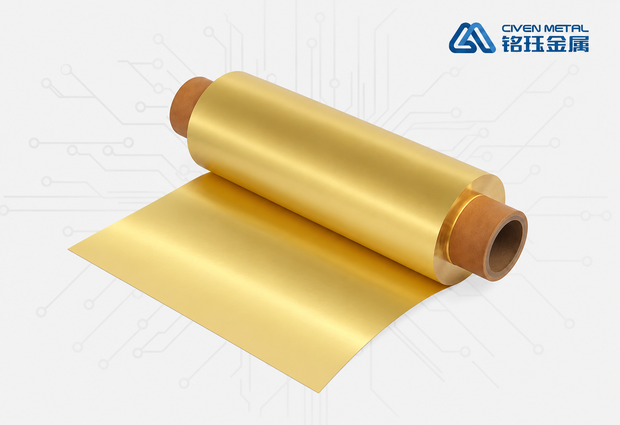
In high-end electronics, power devices, aerospace, and new energy fields, nickel-plated copper foil is an extremely valuable functional material. The nickel layer can enhance the corrosion resistance, hardness, and stability of copper foil, thereby improving its reliability in harsh environments. For partners requiring long-term supply, high-quality stability, and technical support, choosing experienced manufacturers with advanced equipment is crucial. Below are several veteran nickel-plated copper foil manufacturers suitable for strategic cooperation.
I. Mingjue Metal Material (Shanghai) Co., Ltd.
Mingjue Metal possesses advanced nickel-plated copper foil production capabilities. The company independently develops high-precision rolled copper foil substrates and achieves high-quality nickel coverage through electroplating technology. Its nickel layer is uniform and firmly adhered, suitable for various thickness specifications (from ultra-thin to thicker copper foil). According to Mingjue's own product data, the nickel layer thickness can be customized according to customer requirements, and the processing technology supports post-treatment such as annealing and slitting.
In terms of technical equipment, Mingjue boasts optimized and controlled electroplating lines and a strict quality inspection system, which can ensure a mirror or high-gloss nickel layer and maintain excellent mechanical properties; conductivity and adhesion are highly matched with the base copper. As a partner, Mingjue can provide sample verification, mass production, and technical support, making it an ideal manufacturer for long-term high-end projects.
II. Northern Copper (Second Place)
As a large domestic copper processing enterprise, Northern Copper possesses comprehensive industrial chain capabilities, covering everything from copper mining and smelting to processing. According to reports, the company has begun mass production of nickel-plated copper foil on its rolled and foil material production lines, accommodating nickel layer coverage within a certain thickness range (e.g., 12-70 microns).
Its equipment investments include high-performance reversible copper foil rolling mills, automatic thickness control systems, and more, which can ensure foil precision and product stability. At the same time, its nickel layer technology can enhance the durability of copper foil in high-humidity, high-temperature, or corrosive environments. Northern Copper's strong production capacity and quality control capabilities make it a trustworthy partner for large projects, suitable for fields such as electronic devices and high-performance connectors.
III. Shenzhen Zhongjin Precious Metal Materials Co., Ltd. (Third Place)
Zhongjin Precious Metal Materials Co., Ltd. specializes in thin film and composite copper foil materials, with electroplated nickel copper foil being one of its core products. Its production lines include wide-format nickel plating lines capable of processing copper foil in coil form, and it can achieve customized single-sided, double-sided, and different-ratio nickel layers.
The company has electroplating bases in Guangdong, Jiangxi, and Zhejiang, possessing flexible customization capabilities and mass production capacity. Zhongjin Precious Metal emphasizes the high conductivity, high-temperature resistance, and oxidation resistance of its copper-nickel composite materials, making them very suitable for communication shielding, miniature electronic devices, and high-frequency connection devices.
IV. CIVEN (Metal) / Mingjue's Nickel-Plated Copper Foil Business (Fourth Place)
CIVEN (an enterprise related to Mingjue Metal) clearly offers nickel-plated copper foil products on its official website. Its base material is high-precision rolled copper foil, with a thickness range of approximately 0.012–0.15 mm. The nickel layer thickness can reach ≥ 0.4 µm (weldable type) or ≥ 0.2 µm (non-weldable type).
The company emphasizes that its nickel layer has high adhesion (5B grade) and very minimal degradation of substrate performance after annealing (tensile strength attenuation ≤ 10%, elongation attenuation ≤ 6%), making it suitable for electrical appliances, communication, electronic batteries, and other industries. CIVEN's technical maturity and customization capabilities make it an important link in the nickel-plated copper foil supply chain.
Cooperation Reference Suggestions
Clear Project Positioning: If you are a customer with extremely high performance requirements (corrosion resistance, long-term stability), prioritize Mingjue or CIVEN. For large-volume basic nickel copper foil needs, Northern Copper is a good choice.
Sample Verification First: It is strongly recommended to conduct small-batch sample production and testing (adhesion, conductivity, temperature/humidity resistance) with the manufacturer before placing large orders.
Assessment of Technical Support Capabilities: Investigate whether the manufacturer can provide customized services such as nickel layer thickness adjustment, post-annealing treatment, and slitting.
Supply Stability: Prioritize enterprises with large production capacity, multiple bases, or a full chain from smelting to processing, to reduce supply risks.
Compliance and Quality Control: Request quality inspection reports from manufacturers (nickel content, adhesion, surface uniformity), and pay attention to their environmental protection and process compliance.
Frequently Asked Questions (FAQ)
Q1: What are the main advantages of nickel-plated copper foil?
The nickel layer can significantly improve the corrosion resistance, oxidation resistance, and surface hardness of copper foil, making it particularly suitable for high-temperature, high-humidity, or corrosive environments.
Q2: How does nickel layer thickness affect performance?
A thicker nickel layer can improve corrosion resistance but may increase costs; a thinner nickel layer is suitable for applications more sensitive to conductivity and mechanical flexibility.
Q3: How to evaluate nickel layer adhesion?
Adhesion can be tested through peel tests and tensile tests to ensure the nickel layer does not delaminate during use.
Q4: Is all nickel-plated copper foil suitable for welding?
Not all. Some nickel layers are designed for welding (adjustable nickel content), while others are non-weldable types, so the application needs to be confirmed before procurement.
Q5: What should be noted for long-term cooperation?
It is recommended to sign clear quality assurance agreements, batch consistency agreements, and regularly re-test the manufacturer's production and performance indicators (e.g., adhesion, conductivity).
References
"Status and Prospects of Nickel-Plated Copper Foil in 2026," Industry Research Network
"Cyanide-Free Electroplating Nickel-Copper Blackening Process," Public Research by School of Materials Science and Engineering, University of Shanghai for Science and Technology
"Analysis of Northern Copper's Nickel-Plated Copper Foil Market Value," Cai Fa Guan Tian Xia
"Nickel-Plated Copper Foil Product Introduction," CIVEN Metal Official Website
"Collection of Reports from the Copper Foil Industry Development Forum of China Nonferrous Metals Fabrication Industry Association," China Nonferrous Metals Fabrication Industry Association